When construction projects become harder to manage, the symptoms usually appear before the underlying problem is obvious.
Teams spend more time chasing information. Reporting takes longer to prepare. Processes vary from project to project. Leadership asks questions that require hours of manual research to answer. Project teams create spreadsheets and workarounds just to keep things moving.
It’s easy to assume the solution is another person, another piece of software, or a complete process overhaul.
But before deciding what to fix, organizations need to understand where the friction is actually coming from.
That’s where an operational diagnostic can help.
What Is an Operational Diagnostic?
An operational diagnostic is a focused review of how work actually moves through an organization.
Rather than evaluating every process, system, and department in exhaustive detail, the goal is to identify the operational issues creating the greatest impact on project delivery.
For construction organizations, that means looking at the connection between people, processes, technology, reporting, and accountability.
The objective isn’t to produce a lengthy report.
It’s to answer a much more useful question:
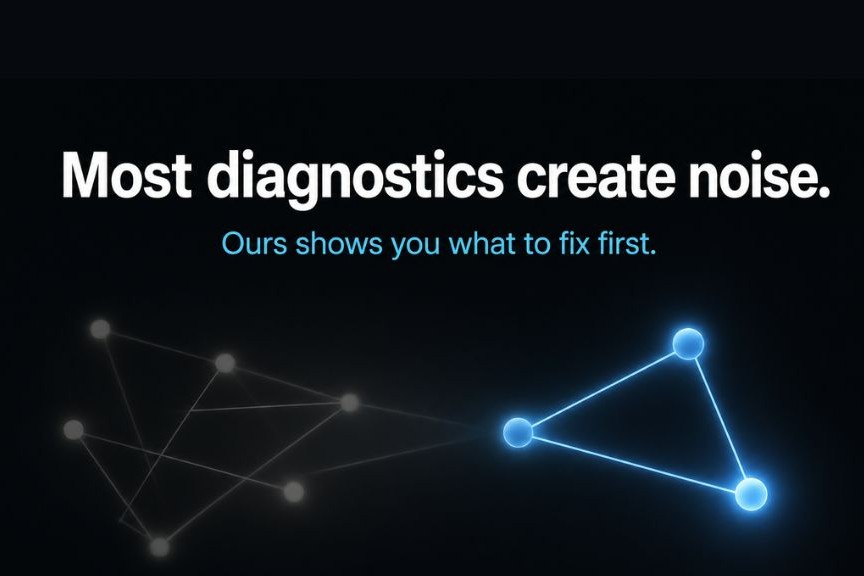
What’s getting in the way of efficient project execution — and what should we address first?
1. Where Are Project Workflows Creating Friction?
A process can technically work and still create unnecessary work.
Teams may be entering the same information into multiple systems. Approvals may rely on email instead of a defined workflow. Project information may move differently depending on who’s managing the job.
Individually, those inefficiencies can seem minor.
Across dozens of projects, they add up.
An operational diagnostic looks for those friction points and determines where workflows could be clearer, more consistent, or better aligned with how teams actually work.
2. Is Leadership Getting the Information It Needs?
More reporting doesn’t necessarily mean better visibility.
Leadership needs information that is timely, consistent, accurate, and useful for making decisions.
If every project reports differently, information isn’t updated consistently, or teams spend hours manually assembling executive reports, the reporting process itself may need attention.
A diagnostic helps determine whether leadership reporting is providing genuine visibility or simply producing more information.
3. Where Are Accountability Gaps Slowing Execution?
Many operational problems aren’t caused by a lack of effort.
They’re caused by unclear ownership.
Who updates the information?
Who approves the next step?
Who follows up when something stalls?
Who owns the process across departments?
When those responsibilities aren’t clearly defined, work can sit between people or teams while everyone assumes someone else is handling it.
Identifying those gaps can often improve execution without adding additional resources.
4. Are Your Tools Supporting the Operation?
Construction companies have access to more technology than ever.
But adding software doesn’t automatically improve operations.
A diagnostic looks at whether existing systems are actually supporting the workflows they’re intended to manage.
Are teams using the platform consistently?
Are important processes still happening outside the system?
Are spreadsheets compensating for missing workflows?
Is information moving effectively between systems?
Sometimes the organization doesn’t need another technology investment.
It needs to get more value from the tools it already has.
5. What Should You Fix First?
This may be the most important part.
When organizations begin looking closely at their operations, they can quickly uncover dozens of opportunities for improvement.
Trying to fix everything at once usually creates another problem.
A focused operational diagnostic prioritizes the two or three areas that can create the greatest immediate impact.
That might mean clarifying ownership of a critical workflow, standardizing project reporting, eliminating duplicate entry, improving technology adoption, or establishing a consistent process across projects.
The goal is progress — not a 40-page list of everything that could theoretically be better.
You Don’t Always Need a Complete Overhaul
Operational improvement doesn’t have to begin with a massive transformation initiative.
Sometimes the most valuable first step is simply understanding:
- Where are we creating unnecessary friction?
- Where are we losing visibility?
- Where is ownership unclear?
- Where are our systems failing to support the process?
Once those questions are answered, organizations can make more informed decisions about where to invest their time, people, and resources.
ZoKa Solutions’ operational diagnostic is designed to provide construction organizations with a focused, prioritized view of their current operations — identifying the highest-impact opportunities and creating a practical starting point for improvement.
Because before you decide how to fix the operation, you need a clear picture of what’s actually getting in the way.